


Conference room layouts have a profound impact on how attendees experience events in terms of participation, accessibility, formality, communication and comfort, making the right venue choice crucial. Common meeting room configurations include classroom, theatre, boardroom, Cabaret, U-shaped and banquet layouts, whilst informal structures provide a casual ambience and flexibility.
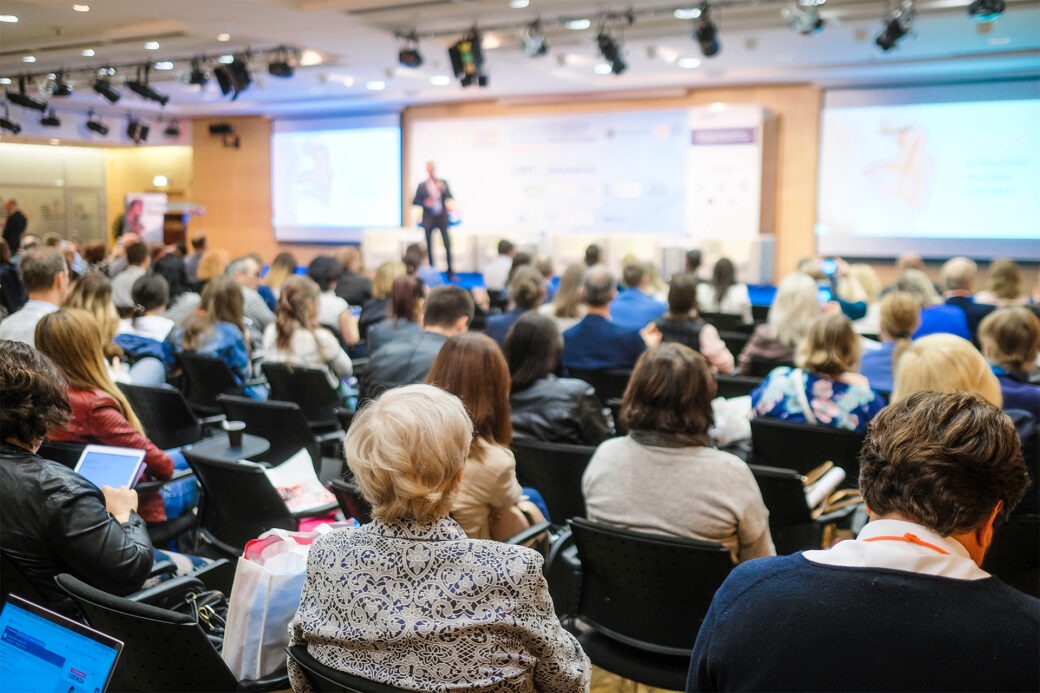
The science is in: conference room layouts have a proven impact on attendee experiences, and event planning veterans and newbies alike stand to gain from it.
Although seating arrangements and lectern positions may feel trivial on the face of it, they’re quietly altering your audience’s impression of the event, even reshaping anticipated group dynamics and participation levels. For professionals seeking a venue for a corporate AGM, conference, class, charity ball, or a wedding, that prompts a big question: how can I harness this knowledge?
That’s exactly what this guide will teach you. Drawing from the technical insights I’ve accrued over two decades in the hospitality game, let’s explore how something as seemingly innocuous as a conference or meeting room setup can enhance or, indeed, impede your event objectives.
Skip ahead to:
- TL;DR
- Why Layout Matters
- Types of Conference Room Layout
- Choosing the Right Setup
- Venue Considerations
- Next Steps
- FAQs
TL;DR
Conference room layouts have a profound impact on how attendees experience events in terms of participation, accessibility, formality, communication and comfort, making the right venue choice crucial. Common meeting room configurations include classroom, theatre, boardroom, Cabaret, U-shaped and banquet layouts, whilst informal structures provide a casual ambience and flexibility.
Why Layout Matters
Conference room configurations are in many ways like a uniform; speaking a silent visual language, they set our expectations for the upcoming event, communicate brand values, and give an indication as to the level of formality – insights that are snapped up in seconds. Unsurprisingly, this puts pressure on event planners to get the venue selection spot on.
By the same token, when you do get it right, the layout can multiply the success of your event, prolonging its impact much further than the final applause. Why? Because the way the space is structured, including how closely people sit, directly influences comfort, communication, and overall engagement.
Seating Arrangement Always Trumps Seating Capacity
Yes, it’s not just about getting bums on seats, cramming in as many attendees as possible to inflate ticket sales; more important is how you prime your audience for attentive listening, active participation, and lubricate their ability to network. This, of course, goes hand in hand with accessibility and the setup’s alignment with your objectives and planned activities.
After all, an intimate 10-person workshop will feel oddly formal, not to mention impractical, in a theatre room, just as a keynote speech won’t go down as well in a banquet layout.
Tick all of the boxes above, and you’ll steer the conversation in your favour, moulding the perception of professionalism.
Some Quickfire Layout Principles
So, I’ve firmly established that conference room seating plans are the silent architects of impactful events, but what does that look like in practice? In my experience, putting your best foot forward requires a proper understanding of how participants, panellists, moderators, hosts and so on interact within different spaces.
These are the ground rules for interaction stripped down to their basics:
- Interaction and discussion increase when participants face one another
- Likewise, the closer people are seated together, the greater the level of communication
- Audiences become more passive, the further apart they are seated, and especially if they can’t see each other’s faces
- When a chair is positioned on the podium behind a lectern or table, it reinforces their authority in relation to the audience
- Conversely, if the chair is seated around the table along with the participants, the emphasis is on facilitation, making the ambience less hierarchical and active participation more encouraged.
When you’re searching for a venue space, keep these principles in mind to guide your choice.
Breaking Down Event Industry Classics: 7 Popular Types of Conference Room Layout
1. The Theatre or Auditorium Layout
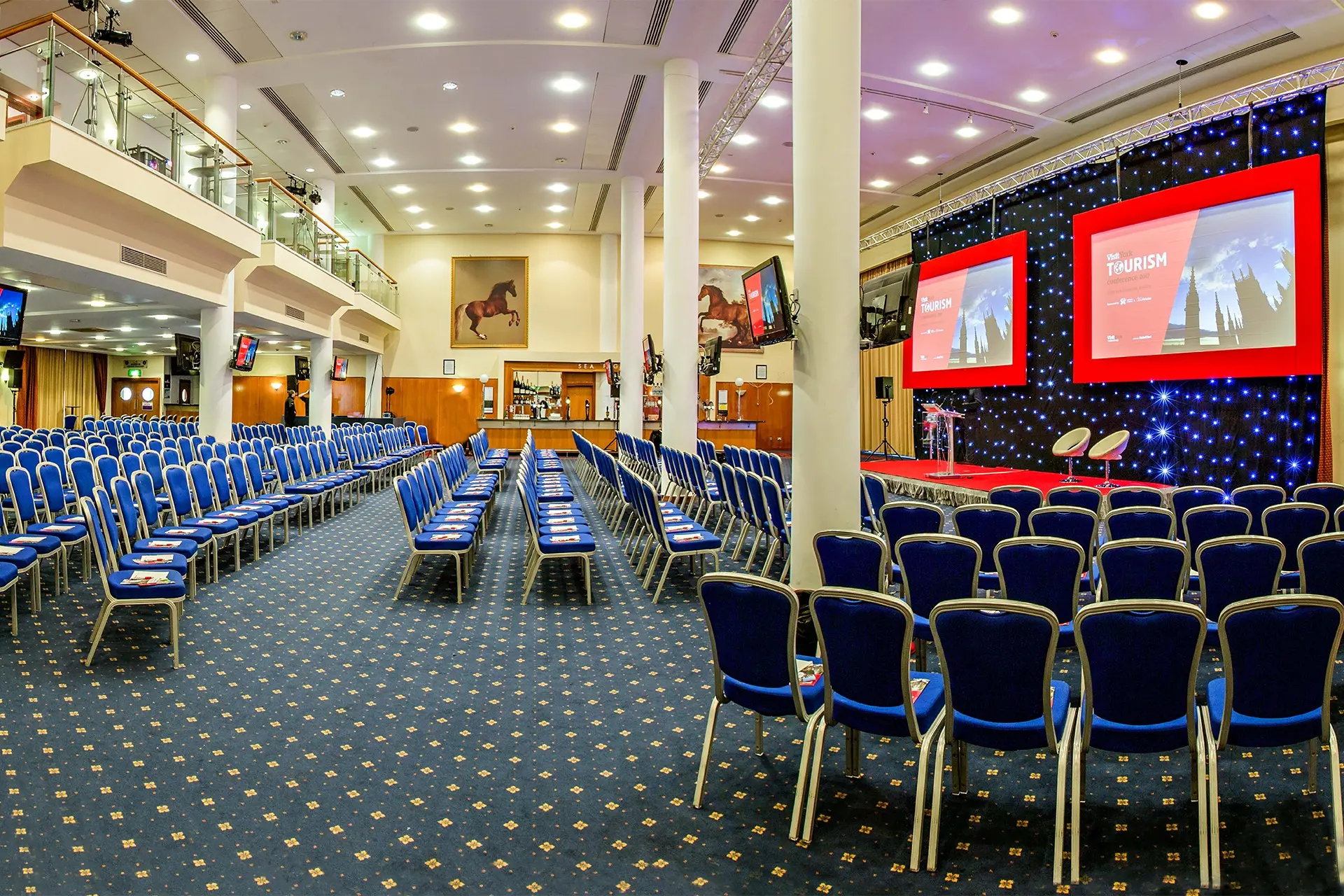
Inevitably, the first image that springs to mind when envisioning a corporate conference is the classic theatre-style layout. This is exactly what it sounds like: a theatre room – AKA an auditorium – filled out with side-by-side seating, all facing the front of the room. Often, this front spot is home to a stage, dais, desk or other central point occupied by the host or speakers.
As you might expect, the auditorium was made for presentation-led events: the seating arrangement and clear sightlines to the floor make for an environment in which the audience can easily give their undivided attention to the talks unfolding ahead.
That said, studies on classroom seating have found that, while row-based layouts can indeed improve focus, it’s often at the cost of reduced interaction between participants. Logistically, it’s also a little tricky in terms of note-taking. For events with a mix of activities, this might call for a bit of additional planning or a larger venue, like our Exhibition Hall space, whose seating can be modified to accommodate a traditional theatre arrangement for a plenary, along with stalls, other meeting areas and so on.
- Ideal For: Large presentations, keynote speakers, conference or convention talks, lectures, performances, concerts, trade shows and award/recognition ceremonies.
- Pros: Tends to be cost-effective for larger events, given that the layout maximises capacity. Brings unmitigated focus to the speaker.
- Cons: Limits interaction between attendees and discourages participation, such as questions.
2. The Classroom Layout
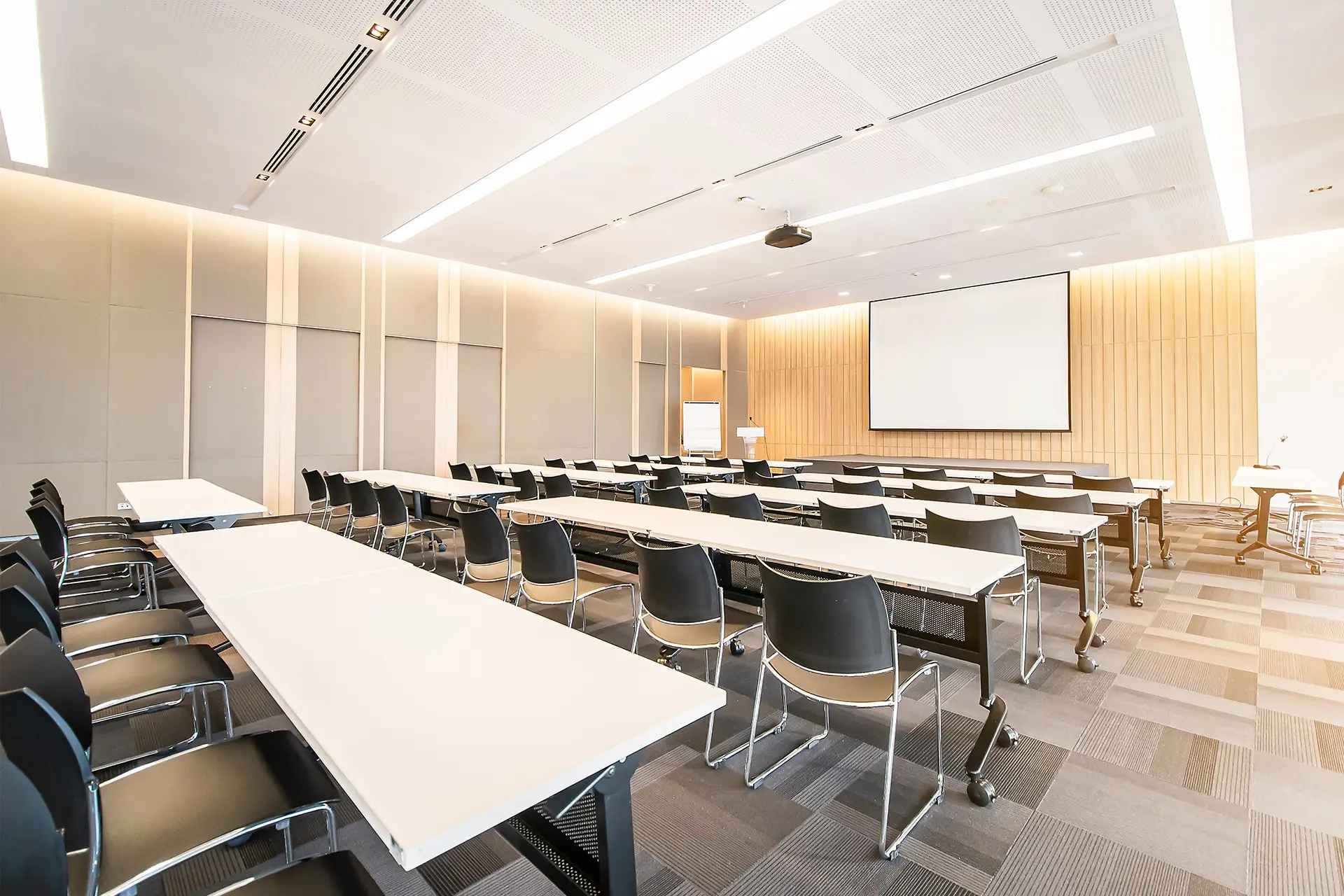
The classroom layout is a familiar sight for INSET days, seminars and professional development sessions. Delegates are seated in rows facing the front of the room, but unlike the theatre style, each place is equipped with a table or desk, making it less cumbersome for note-taking.
Here, the major draw lies in how the setup strikes a balance between focus and function. Attendees remain largely audience-oriented, but the addition of tables supports longer sessions where engagement comes through learning rather than discussion.
When you’re booking a venue for an event such as these, it’s often in smaller, breakout spaces that you’ll find this traditional meeting room layout. Case in point: our Knavesmire suite, which serve as stand-alone meeting rooms, or part of a broader conference venue if you include the main plenary room on the floor below.
- Ideal For: Training sessions, workshops, seminars, educational courses and corporate learning events.
- Pros: Encourages concentration while supporting note-taking and practical exercises. Works well for structured agendas.
- Cons: Still limits interaction between delegates and can feel rigid for more collaborative sessions.
3. The Boardroom Layout
A fixture in our collective imagination, from The Apprentice to the UK Cabinet Office, to say the boardroom layout is iconic is an understatement.
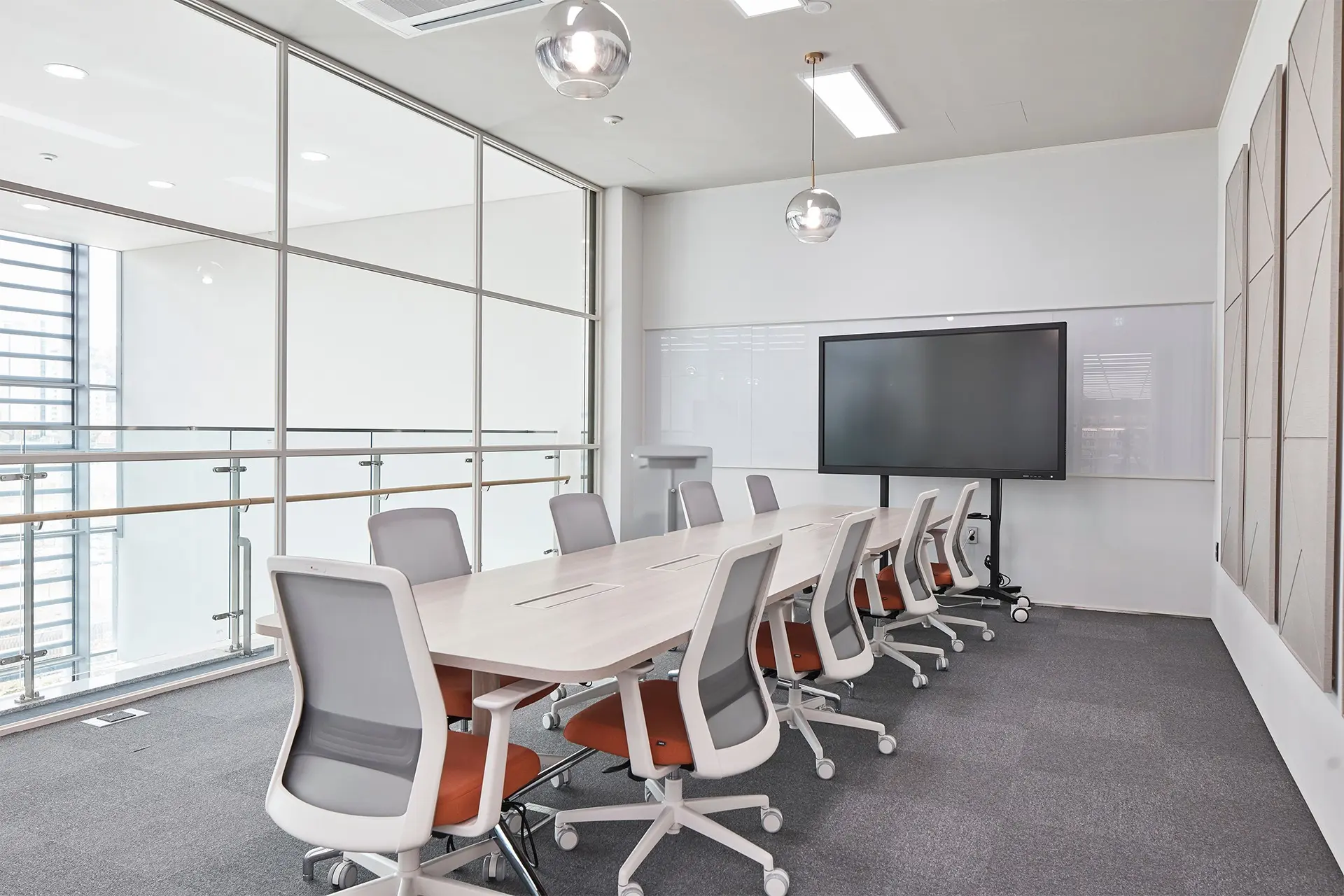
In terms of the layout, it is centred around a single large table, with attendees seated facing one another. As a result, it’s inherently collaborative and places everyone on equal footing, encouraging direct, unfettered communication.
It’s unsurprising, then, that the boardroom configuration is a go-to for smaller, high-level meetings, as the arrangement naturally fosters discussion, a prerequisite for decision-making and problem-solving.
- Ideal For: Executive meetings, strategy sessions, interviews, client presentations and team briefings.
- Pros: Promotes open dialogue, eye contact and equal participation. Creates a professional, focused atmosphere.
- Cons: Limited capacity and not suitable for presentation-heavy or large-scale events.
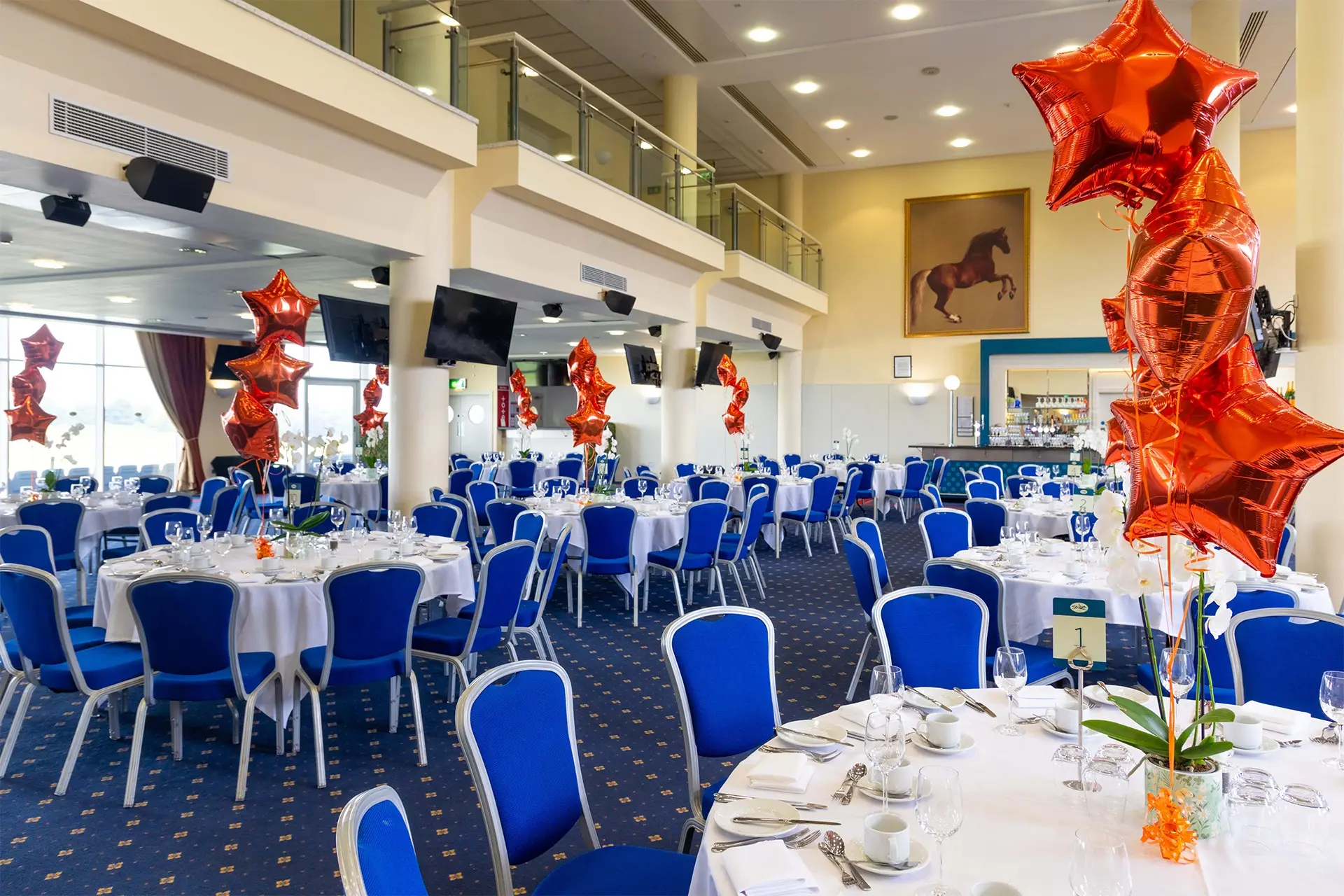
4. The Banquet Layout
The banquet layout is synonymous with celebration and social connection. Guests are seated around round tables, typically accommodating 8-10 people for a relaxed and inclusive dining experience.
This format is designed to maximise conversation and enjoyment, hence why it’s the preferred choice for formal dinners, awards evenings and large-scale social events. At York Racecourse, our elegant Dante Suite is particularly well suited to banquet-style setups, offering a refined backdrop with ample space for dining, entertainment and seamless service.
- Ideal For: Gala dinners, charity balls, weddings, awards ceremonies and corporate hospitality events.
- Pros: Highly sociable, comfortable for dining and encourages networking. Creates a premium, celebratory atmosphere.
- Cons: Less suited to presentation-heavy agendas, as sightlines to a stage can vary depending on table positioning.

5. The Cabaret Layout
Close relative to the banquet conference room layout, cabaret-style seating also seeks to blend sociability with presentation. Again, the guests are seated around round tables, but the key difference is that one side is left open to create a semi-circle configuration. These tables are then all angled towards a focal point such as a stage or screen.
The reason it’s popular for events that combine content with networking or group work is the delicate balance between speaker engagement and interaction among attendees. So, if it’s the best of both worlds you’re after, this layout might be the one for you.
- Ideal For: Conferences with breakout discussions, training days, award ceremonies and networking events.
- Pros: Encourages collaboration while maintaining good sightlines to presentations. Comfortable and versatile.
- Cons: Takes up more space than theatre or classroom layouts, reducing overall capacity.
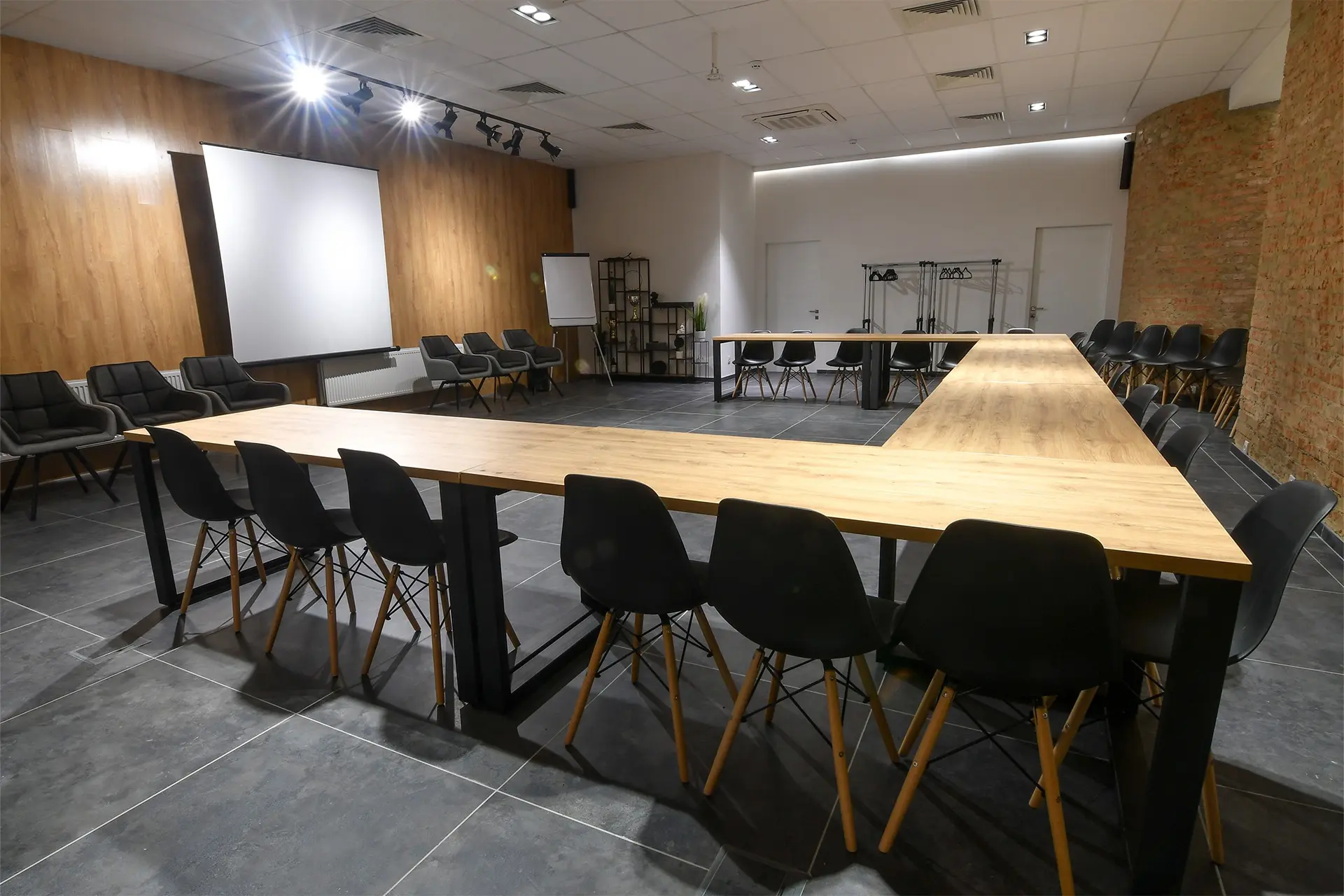
6. U-Shaped Layouts
The U-shaped layout arranges tables in a horseshoe formation, with an open end facing the presenter or screen. This design keeps all participants visible to one another while maintaining a clear focal point, a happy medium between the more formal boardroom setup or theatre layout.
Since research into spatial behaviour shows that people are more likely to participate in face-to-face seating arrangements, U-shaped layouts are the ideal choice for interactive sessions where discussion flows between the facilitator and the group, as well as among participants themselves.
- Ideal For: Workshops, training sessions, panel discussions and collaborative meetings.
- Pros: Facilitates interaction and visibility. Allows space for a presenter to move and engage with the group.
- Cons: Not the most space-efficient and less suitable for large audiences and, therefore, can limit seating capacity significantly.
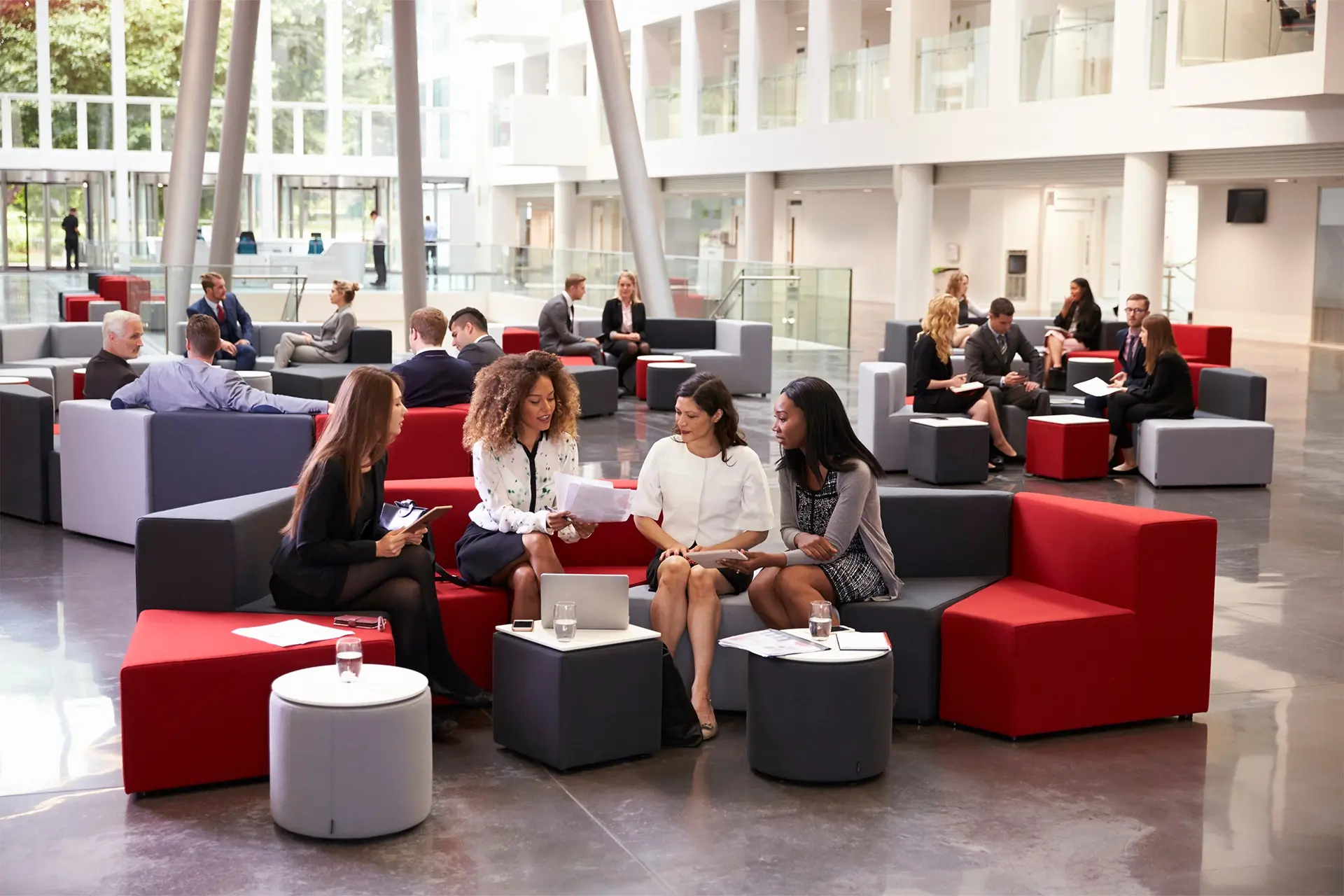
7. Informal Setups
Informal layouts break away from traditional structures, offering a more relaxed and flexible approach to seating. I’m talking about lounge areas, soft seating, scattered tables, or even standing zones designed to encourage movement and organic interaction.
These setups are increasingly popular for modern events that prioritise comfort, creativity and connection over formality, so things like life events, be they a wedding reception, funeral wake or a large anniversary party.
- Ideal For: Networking events, team-building sessions, creative workshops, receptions and casual gatherings.
- Pros: Encourages natural conversation, flexibility and a more relaxed atmosphere. Easily adaptable.
- Cons: Can lack structure and may not suit formal presentations or tightly scheduled agendas.
An Honourable Mention: Chair-Only Setups
Besides these popular conference room layouts, there are many other setups to consider, some offering much greater levels of flexibility.
If you’re after a certain level of intimacy, removing physical barriers between attendees so you can communicate as equals is a good choice.
Favoured for charity workshops, casual networking sessions, community organising groups and team building exercises, the seating can be rearranged at a moment’s notice, from a circle or semi-circle setup to a big horseshoe. The chairs are your oyster.
Choosing the Right Setup
With so many conference room layouts on the table, narrowing down your options can feel like splitting hairs. Fortunately, much of the decision comes down to understanding what you’re trying to accomplish here.
Are you planning a conference or AGM? Then, networking and professional development are your priorities, which require a more structured layout, conducive to an attentive audience and active listening. On the flipside, the success of galas, banquets, weddings and other social events hinges upon a sociable layout to keep spirits high during dining and guest mingling. And, of course, seminars and workshops are more inclined towards the middle ground, balancing engaged focus and interaction to support learning.
If you want to get things right for your organisation, here are some questions we often pose to our clients:
- How many delegates are you expecting? And, therefore, how large does the room need to be?
- Does the event require a set and stage? Music or DJing? What about back projection?
- What ambience is optimal? Something open and airy, or perhaps something a little cosier and contained?
- Will there be any group activities or break-out sessions that require a more modular layout?
- How do you envision movement in the space? Is a fixed route preferable to the free circulation of guests?
- What level of formality are you aiming for?
- How encouraged is audience participation and group discussion?
- Do you need lounges or quiet areas for speakers and/or neurodivergent attendees?
- Is a catered food service a must? Will it be a sit-down meal or a more informal buffet-style selection?
When we have the answers, we can situate your event among our venue spaces and guide the best size, amenities and configuration.
Additional Venue Considerations
In 2026, venue considerations are more sophisticated than ever, so alongside the questions above, you might also wish to mull over:
- Room flexibility – If you’re hiring the space for multiple talks, a flexible arrangement or one that can be easily modified between events may prove beneficial.
- Capacity ranges – Perhaps the element closest to budget, don’t forget to estimate your expected attendance on real data, rather than expectations or ‘guesstimates’.
- Accessibility – Besides the tangible elements (think: step-free access, tactile markings, clear signage, quiet areas and gender-neutral toilets), venues with good transport links, hybrid-event readiness and cohesive emergency evacuation policies help create frictionless experience for everyone.
- Catering options – If using the venue’s catering services, ensure they cater to a variety of dietary requirements and that menus match the tone of your event.
- On-site support – Does the venue provide staff support? If so, what does that entail? Having a few extra pairs of hands on board may help iron out any kinks in your agenda.
Conclusion: It’s Time to Narrow Down Your Options
Securing the most impressive venue spaces, or indeed, the most beautiful location, means nothing if the conference room layout doesn’t gel with your program.
Ideally, the function room ought to be closely aligned with the structure of the event and its intended outcomes, which necessitates close comparison and in-person visits to the sites on your list. Do this well, and you’ll see a world of difference in your KPIs.
I know what you’re thinking: this is all easier said than done – but we at York Racecourse are here to help. If you’re ready to take the first step, speak to our venue team for a word of advice. We’ll sort you out with the proper setup, worthy of your organisation.
FAQs
What is the best conference room layout for large events?
The theatre-style conference room layout is typically best for large events, as it maximises seating capacity and keeps the audience focused on the speaker. However, it limits interaction, so it’s best suited to presentations or keynote sessions rather than collaborative formats.
Which meeting room layout is best for collaboration?
Layouts such as cabaret, U-shaped, or boardroom setups are ideal for collaboration, as they allow participants to face one another and engage more easily. These conference room configurations encourage discussion, making them well suited to workshops, training sessions, and group activities.
How do I choose the right conference meeting room setup?
Choosing the right conference meeting room setup depends on your event goals, audience size, and level of interaction required. Consider whether your focus is on presentations, networking, or discussion, and select a layout that supports those outcomes while fitting your venue space.
How does conference room layout affect attendee engagement?
Conference room layout directly impacts how attendees interact, communicate, and engage with content. Face-to-face setups tend to increase participation, while row-based layouts improve focus but can make audiences more passive.
What is the most flexible conference room configuration?
Cabaret and informal layouts are among the most flexible conference room configurations, as they can adapt to both presentations and group interaction. These setups are ideal for events that require a mix of networking, discussion, and structured content.
