


Sustainability at Events: Beyond Brand Brownie Points & Adapting to a Changing World
13/10/2026

There is something darkly poetic about the BBC headline “Heat adaptation event cancelled as heatwave grips”. This was one such cancellation in a string of hundreds, as conference delegates, festival and concertgoers, symposium panellists and sporting fans alike braced themselves for last-minute travel disruption in June 2026.
Besides the agonising heat and the disappointment, these rising temperatures signal an urgent call for change: a strengthening of global treaties, local governance, and improved response and mitigation plans across all sectors, but in the events industry especially so. Hence, this guide to sustainability at events.
Here I will lay out why we event professionals ought to be thinking more about our environmental footprints and how, as a broader collective, the industry can protect attendees from the worsening impacts of climate change.
Contents:
- TL;DR
- Why is Sustainability at Events More Urgent Than Ever?
- The 6 Pillars of Sustainable Events
- How to Future-Proof Your Climate Strategy: Initiatives for Venues & Organisers
- Measuring Impact: KPIs & Impact Assessment
- Conclusion: We’re All in it Together
- FAQs
TL;DR
Sustainability at events means reducing environmental impact through lower carbon emissions, less waste, responsible water and energy use, biodiversity protection, sustainable travel and transparent reporting. For event organisers and venues, embedding these measures into long-term strategy can also improve climate resilience, reduce operating costs and meet growing attendee expectations.
Why is Sustainability at Events More Urgent Than Ever?
The climate crisis is the defining issue of our time. Its tendrils have a tight hold on UK industry, from food production and infrastructure to entertainment, business and leisure.
As the new millennium has unfolded, the impacts have become more visible and closer to home; extreme weather events now affect functions on British soil in ever tangible ways. Necessarily, the hospitality sector has a duty to act.
To me, this neatly falls into two categories: mitigation and adaptation. But before I divulge, here’s a little more of the ‘why’.
Global Industry Environmental Footprint
Whilst global events employ and serve millions of people worldwide, because they must also transport, feed, entertain and provide for those people, its environment footprint is sizeable.
On average, events generate 7.61 tCO₂e, with 61% of emissions stemming from production, materials, catering, and infrastructure. Now, consider that only 31% report audience travel data. Yes, that means that these estimates are conservative at best. To mitigate the worst of global heating, we all need to do as much as we feasibly can to lower these rates.
Increasing Event Disruption
British events organisations face a tricky dilemma. How can organisers and venues keep the £11.5 billion industry thriving whilst navigating the risk of extreme weather incidents?
Mass gatherings are already a complex beast to manage; planning a conference, for instance, demands safe, reliable travel, a team of professionals who can configure room layouts to shape attendee experience, tight catering and crowd-control logistics, security and risk management.
Throw heat waves or flooding into the mix, and professionals can really struggle to manage the changing operational challenges and stave off cancellations or postponements.
A report from the International Journal of Disaster Risk Reduction found that climate change was the root cause of 69% of the disruption analysed across 2,091 global case studies. In the UK specifically, major storms were the main cause of disruption; however, heat waves, wildfires, drought, poor air quality, dust storms, and hard, scorched ground also present a serious danger to attendees, particularly in the context of sporting events, festivals and trade fairs where crowd sizes, physical exertion and the consumption of alcohol are high.
The Economic Perspective
Beyond the environmental and logistical advantages of event sustainability, the bottom line is that wasteful, high-carbon event planning is fiscally untenable in our day and age.
Attendees have come to expect clear sustainability commitments from venues (especially Gen Z); 85% of consumers view companies that support causes they care about more positively; and greenwashing accusations are rife. The savvy event planner knows that climate-conscious events are conducive to innovation and creativity, and as a result, tend to bring higher returns, both to bottom lines and brand loyalty.
Other economic benefits to note are:
- Cost-efficiency via tighter resource management
- Reduced energy costs in the long haul
- A stronger brand reputation
- Good PR opportunities
- Attracting valuable ethically-aligned sponsors, partners and investors
- Potential sustainable financial growth
The 6 Pillars of Sustainable Events
There are innumerable strands of sustainability that event managers and venues can reach for: cultural changes, simple like-for-like switches, strategic procurement partnerships, and technological innovations to exploit. However, each and every improvement hinges upon one of the following facets:
- Waste reduction (resources and energy)
- Carbon emission reduction
- Water conservation
- Ecological stewardship
- Behaviour modelling
- Transparent reporting

How to Future-Proof Your Climate Strategy: Initiatives for Venues & Organisers
For sustainable events to effectively achieve their goals and embody the pillars above, tangible action is a given. From infrastructural changes and company-wide policy to the intangible culture at the heart of the organisation, there’s a step for every individual and department to take.
Shift Towards Renewable Energy
The most obvious way to curb emissions is to make the switch from fossil fuels to renewable energy systems. Of course, this takes significant infrastructural planning, which may temporarily disrupt events, but weighed against the potential cost savings and CO2 reductions, it’s a clever long-term move.
Even better is knowing that many net zero technologies – industrial solar panels, mains heat pumps, energy management systems, car park EV chargers, to name but a few – can actually cut costs thanks to lower longer-term operational expenses, particularly when paired with a government grant.
Sometimes, though, the most effective change is behavioural: for example, when we upped our staff training and engagement around electricity use, only using lighting when it is specifically needed, we saw tangible change. Alongside our buildings management system and other infrastructural upgrades, York Racecourse’s site-wide electricity use has decreased by 35% since 2018.
Reducing Reliance on Single-Use Materials
For event professionals, waste is often the elephant in the room. Shockingly, studies report that the industry wastes up to 10% of everything it produces – signage, merchandise, cutlery and food, which, in the case of large banquets, is often high-value meat products. This is simply unacceptable.
Fortunately, the solutions are out there; organisers and venues simply need the wherewithal to implement them. Here are a few examples that we, at York Racecourse, have instilled into our day-to-day activities and more:
- Replacing plastics with biodegradable and recyclable alternatives for cutlery and receptacles.
- Encouraging the use of reusable bottles with drinking fountains.
- Sending food waste for energy recovery.
- Stringent on-site recycling.
- Turning cooking oil into biofuel.
- Fostering the circular economy with low-impact merchandise.
- Going digital for signage.
- Choosing products with minimal packaging.
Biodiversity Enhancement
An overlooked angle of sustainability in the events sector is ecological. We venues and hosts have more of an impact on local biodiversity than we might initially anticipate. As such, events should be conducted in such a way that local ecosystems aren’t harmed and, part and parcel of site maintenance, ought to be environmental stewardship. Examples include:
- Participating in no-mow May.
- Restricting or banning the use of pesticides.
- Making biodiversity improvements through green roofs, tree planting schemes, swift bricks, bug houses, wildflower planting and more.
- Assessing event impact in terms of noise, light, and physical pollution and mitigating the risks where possible.
Becoming Water Wise
Just as energy should be preserved, water use should be constrained too. This will matter all the more as hotter, drier summers are cemented in the British climate going forward. Key considerations include:
- Joining the Leisure Association Water Charter or other binding initiatives.
- Invest in soft landscaping to reduce runoff.
- Using rainwater collection systems for groundskeeping.
- Reducing the need for mains irrigation.
- Working closely with water companies, the Environment Agency and other bodies to develop strategy.
- Educating staff on mindful water consumption.
Sustainable Business Travel Initiatives
Travel constitutes the largest source of emissions for events (often averaged between 80% and %40), but because they often fall under ‘scope 3 ’, many organisations fail to account for its contribution to their overall footprint. To avoid this, the role of attendee journeys and distribution must be accounted for. Think about:
- Encouraging active travel for local events…
- … and flight-free travel for international ones (this Switzerland conference is the blueprint).
- Picking local suppliers to reduce mileage.
- Selecting well-connected, accessible venues.
- Providing EV charging points for staff and visitors.
- Utilising carbon-neutral distribution fleets.
Eco-Conscious Menus
Whatever the occasion in the calendar, Christmas party or corporate gala, your menu directly correlates with environmental impact. More sustainable food options are a quick win for many businesses seeking to slash their carbon footprints. By this, I mean locally sourced, organic, meat-free, and seasonal produce.
Plant-forward offerings that prioritise these lower-impact options create fewer emissions, indeed, but they also cater to changing consumer appetites; namely, a growth in ‘flexitarian’ behaviour, which accounts for 48% of UK meat eaters.
Enshrining Sustainability in Values & Practices
This is perhaps one of the most important steps of all, given that your organisational values tie into brand perception and staff morale, each feeding into your ultimate success.
As such, corporate responsibility can never be allowed to become a trend; instead, it should be a rudder for all future and ongoing projects. In keeping with this, ensure that:
- Staff are encouraged and empowered to make the climate-conscious choice.
- Training covers environmental stewardship.
- Sponsors and suppliers align with your objectives and values.
- There’s authentic buy-in from leaders to instil change across the entire organisation.
Backing Your Mission with Policy
The UK’s Net Zero Policy (its legally binding goal to become carbon neutral by 2050) sets a strong example for events organisations, one that, with adequate planning and investment, you can actually exceed.
More than mere lip service, an ambitious climate commitment means establishing a measurable, actionable accountability framework and following up promises with data-led action. Given that three quarters of UK businesses now have metrics in place to measure environmental sustainability, doing so is more of a strategic imperative than a differentiator nowadays.
Case Study Example
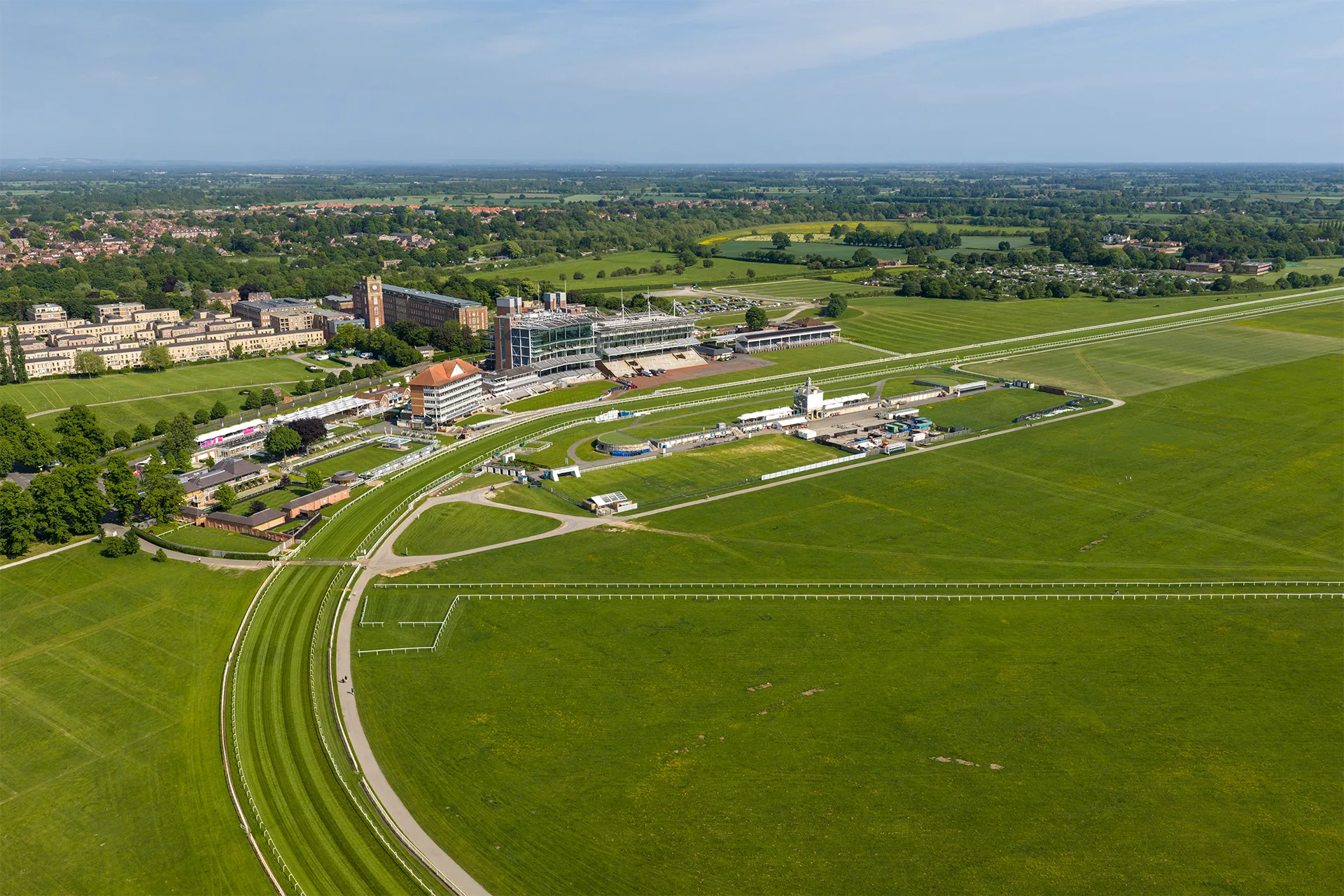
Here at York Racecourse, our ‘Green Knavesmire 300’ environmental strategy has enshrined our climate commitment in policy since 2017. Our mission? To ensure that our facilities’ 300-year legacy continues on for at least another three centuries, all the whilst leaving a positive trace on York’s immediate and business communities.
Recognising that the crisis is multi-pronged, so too was our strategy, which we categorised into 4 key pillars:
- To reach Net Zero emissions by 2040
- To enhance biodiversity
- To conserve water
- To embrace the circular economy
In 2022, we scaled up our sustainability work by undertaking an external review of our overall impact across this quartet of strategic areas in partnership with an independent consultancy, White Griffin. Thanks to their analysis, we unearthed a 50% reduction in our total carbon footprint from 2017 to 2022, allowing us to more accurately benchmark for the future and set the priorities for our future green agenda.
To learn more, read our complete strategy document.
Measuring Impact: Key Performance Indicators for Sustainability at Events
As you can glean from the case study above, a proper sustainability strategy cannot work without a robust methodology for tracking and evaluating event impacts.
This entails the use of SMART objectives from the outset, effective feedback mechanisms from staff and audiences, along with carefully chosen performance indicators to ensure recorded data is actionable and digestible. Such KPIs typically include:
- Carbon emissions generated through the event ( tCO2e), scope F emissions included.
- Biodiversity: genetic diversity, species diversity, ecosystem diversity.
- Water consumption (l)
- Total waste produced/diverted from landfill in tonnes.
- Energy consumption/renewable energy usage (kWh).
Likewise, the approach to analysis should never be scattergun; the most effective outcomes are born from comprehensive impact assessment frameworks, which seek a holistic view of your event or venue’s performance. These things, although not always quantitative, should equally form the basis of your review:
- Thematic analysis from event attendees and staff.
- Direct and indirect environmental consequences.
- Social and economic value derived for local communities and those further afield.
- Alignment of values and practices.
- Long-term behavioural changes as a result of policy and practice.
- Timeframe performance against sustainability goals.
Conclusion: We’re All in it Together
Tackling the impact of climate change in the events industry starts today. After all, it is happening in the here and now, not some hazy, distant future.
Of course, institutionalising changes through policy, organisational values and practice is essential, but beneath this trifecta of tactics lies a bedrock of culture, at every level of the business, from leadership teams to new hires. Instilling healthy green ambitions, thus, must be on event leaders’ agendas.
It won’t happen overnight; it will take a significant amount of research and effort; however, this is what the scale of the crisis demands. So good luck, be creative, stay resilient, and dare to be bold.
FAQs
What Is Sustainability at Events?
Sustainability at events is the practice of reducing the environmental impact of conferences, festivals, sporting events and other gatherings. It encompasses areas such as carbon emissions, energy and water consumption, waste, travel, catering, biodiversity and responsible procurement.
Why Is Sustainability Important for Events?
Sustainability helps event organisers reduce their environmental footprint while adapting to the growing risks posed by extreme weather and climate change. It can also reduce long-term operating costs, strengthen brand reputation and respond to increasing expectations from attendees, sponsors and partners.
What Are the Main Pillars of a Sustainable Event?
The six pillars of sustainable events are waste reduction, carbon emission reduction, water conservation, ecological stewardship, behaviour modelling and transparent reporting. Together, these provide a framework for venues and organisers to develop measurable sustainability strategies.
How Can Event Organisers Reduce Carbon Emissions?
Event organisers can reduce emissions by choosing energy-efficient venues, using renewable energy, sourcing locally, reducing single-use materials, offering lower-impact menus and encouraging sustainable attendee travel. Measuring emissions, including those associated with attendee journeys, is also important for identifying where reductions can have the greatest impact.
How Can Venues Make Events More Sustainable?
Venues can invest in renewable energy and energy-management systems, conserve water, reduce and recycle waste, protect local biodiversity and provide infrastructure such as EV charging and drinking-water stations. Sustainability should also be embedded in staff training, procurement, supplier relationships and long-term venue policy.
How Do You Measure the Sustainability of an Event?
Event sustainability can be measured using KPIs such as carbon emissions (tCO₂e), energy consumption (kWh), water consumption, waste generated and diverted from landfill, and biodiversity indicators. Organisers can combine these metrics with attendee and staff feedback, community impact and progress against long-term sustainability goals to build a more complete impact assessment.
